INDUSTRY:
MEDIA
CLIENT:
CBC (Canadian Broadcasting Company)
YEAR:
2022-2025
EXPERIENCE:
PRODUCT DESIGN

9CMS - Stories
problem.
CBC needed a CMS that improved editorial workflows and was flexible enough to empower innovation across its audience facing platforms.
CBC’s vendor content management system was being deprecated and the organization needed an internal replacement. I joined the project as the first and main designer after an initial proof of concept had been created by developers.
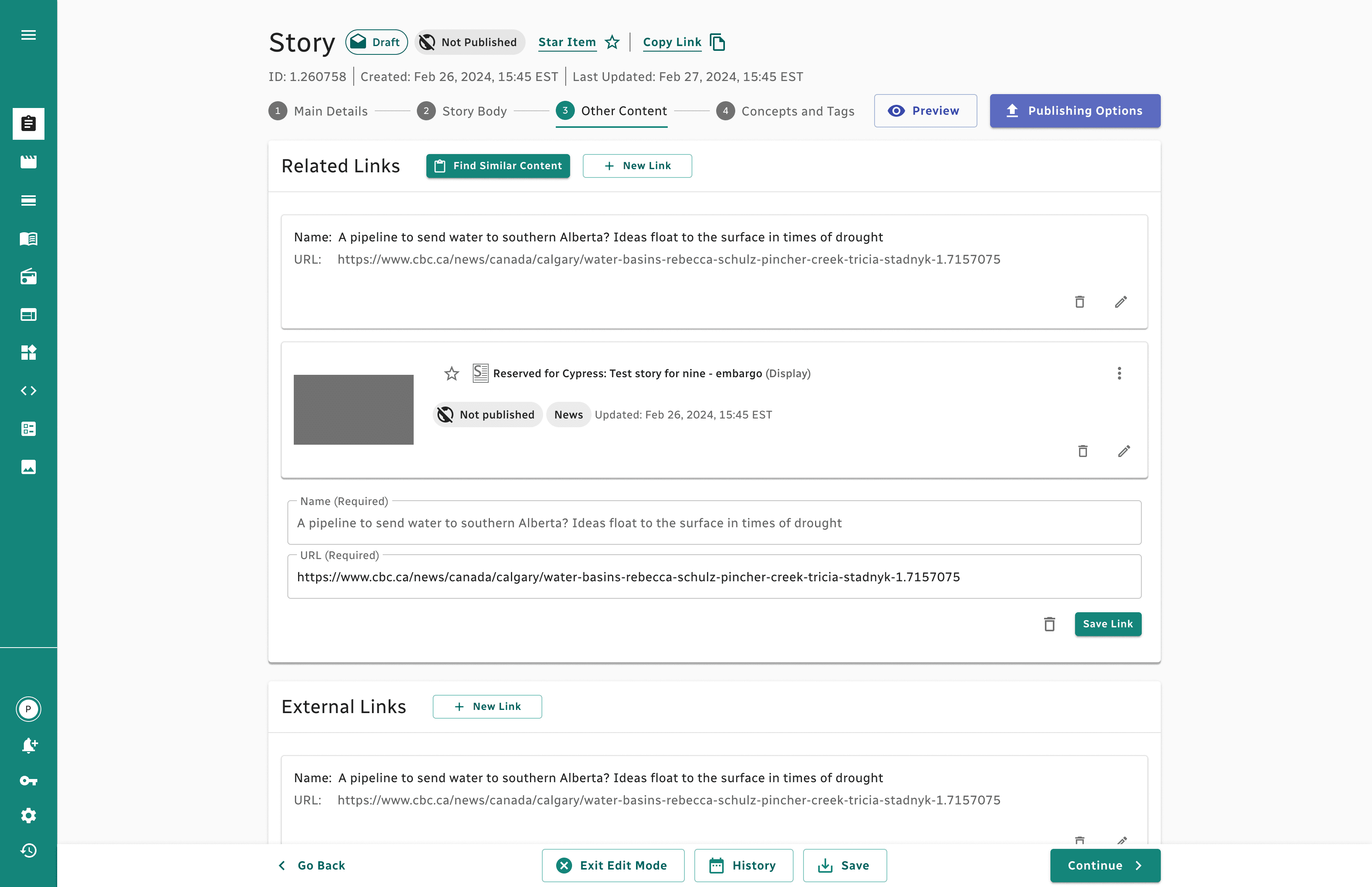
This case study focuses on the designs of the workflow for creating and editing stories on cbc.ca and the CBC news app. Together, cbc.ca and the CBC news app have millions of daily users. This was the first worfklow in the CMS I tackled.
challenges.
Developer led project with no design system or style guide
Hard deadline
Developer heavy team with no existing design processes
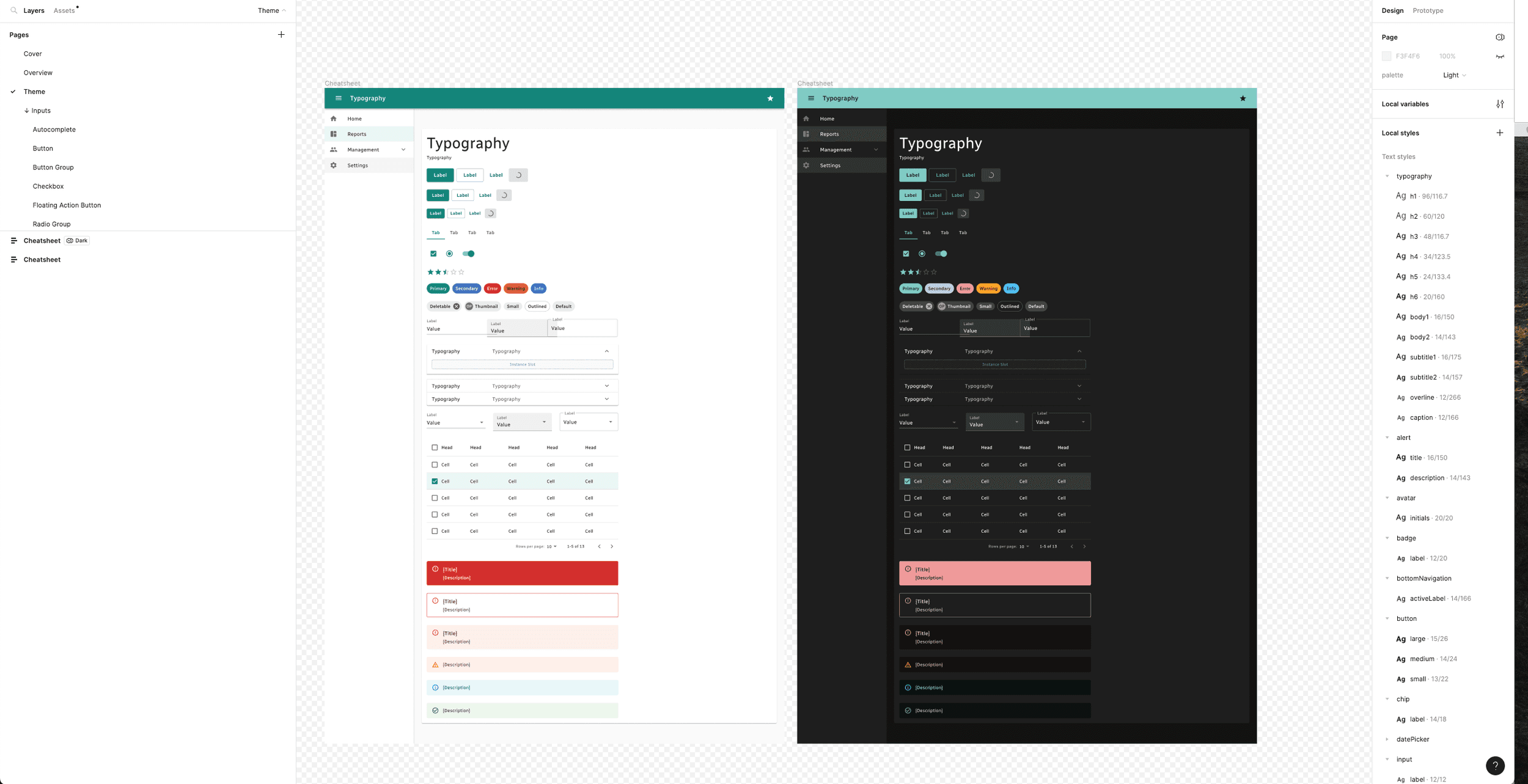
Translating a complex workflow with variations among users
Users are also trying to understand their complex workflows while working at high speeds and pressure
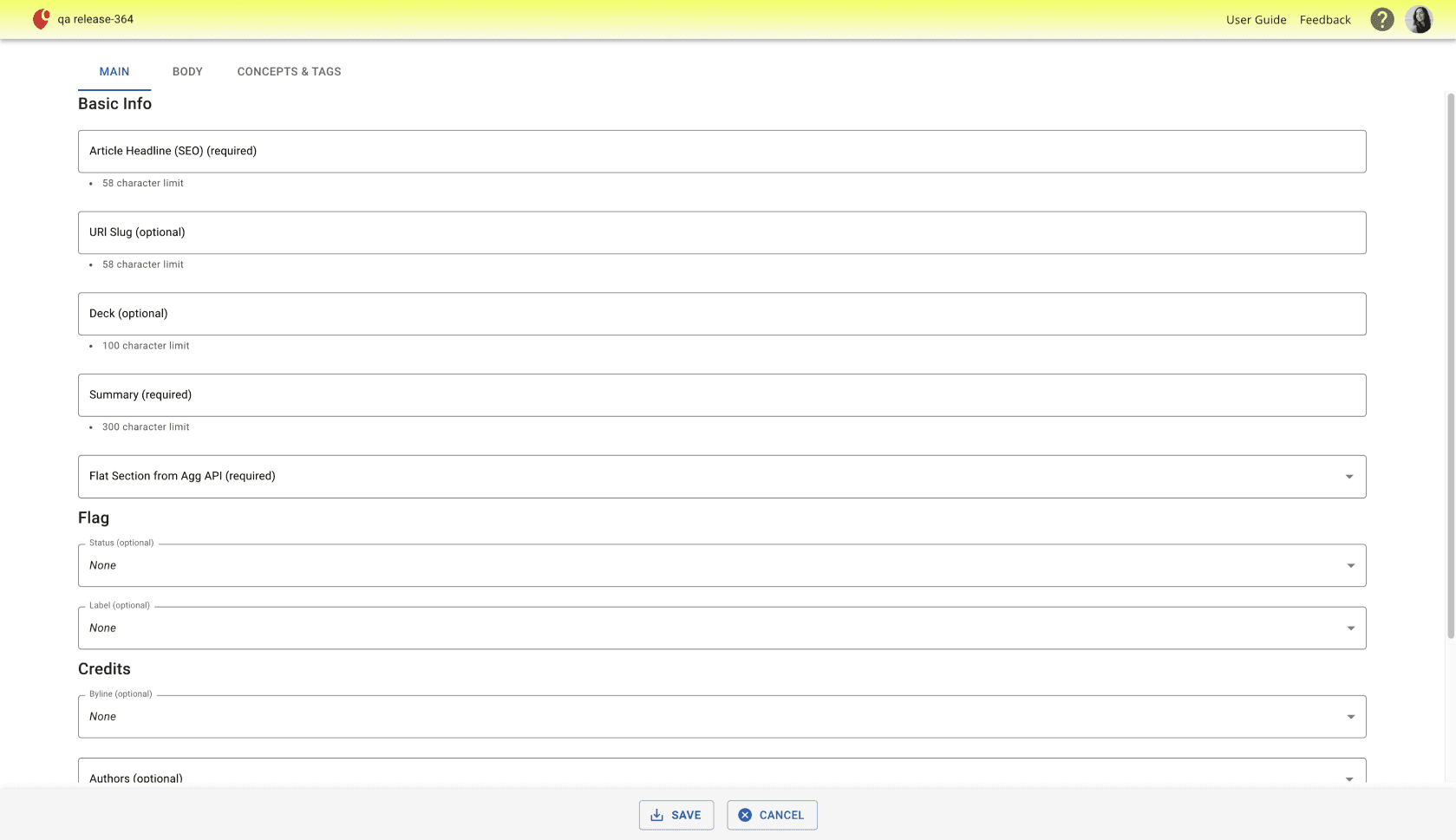
Proof of Concept - Before Design
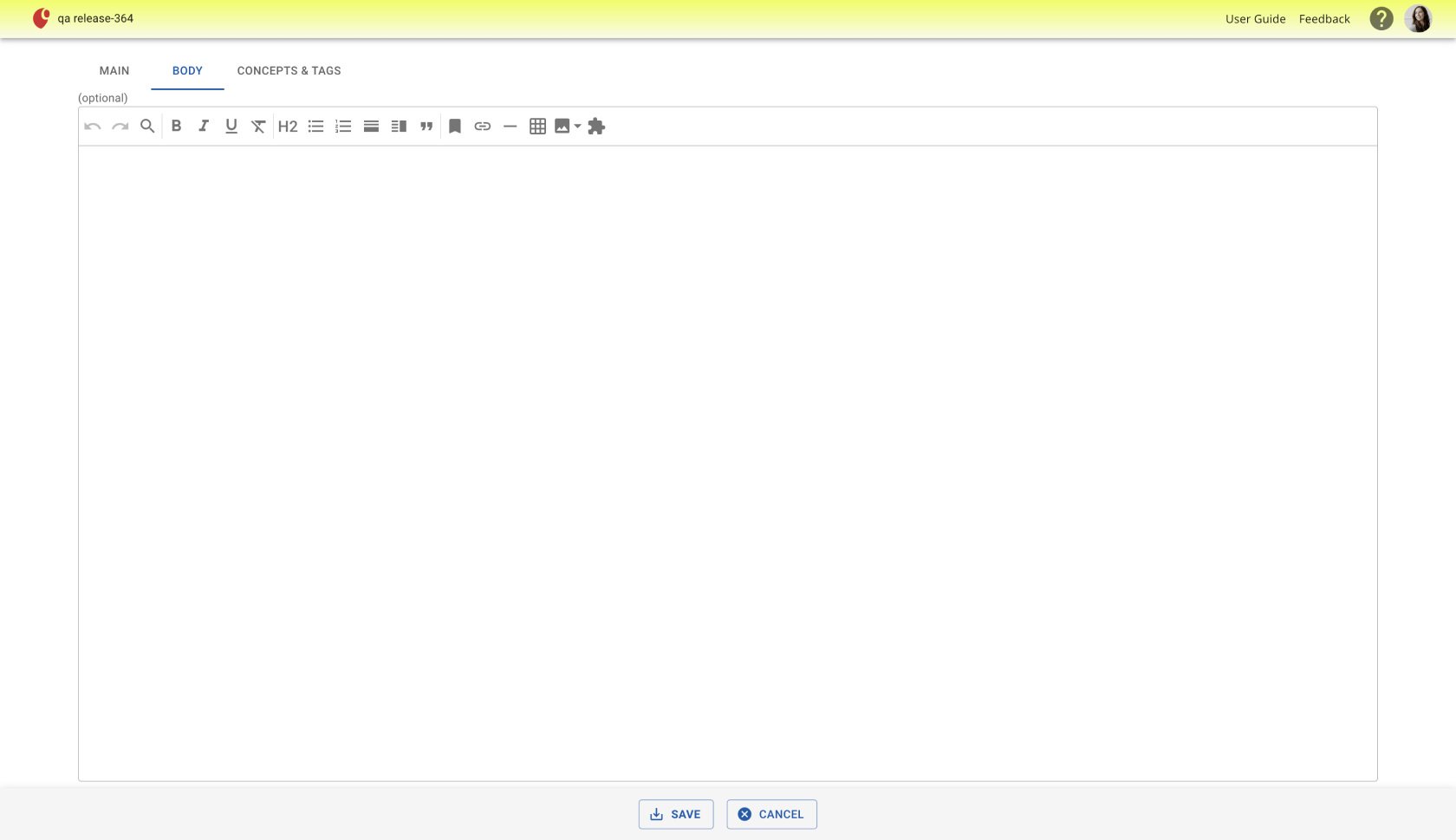
Proof of Concept - Before Design
main user groups:
Producers
Main Users
Packaging, Editing, Collaborating
"I need effortless packaging tools to quickly collaborate with my colleagues to get this story ready to publish by my deadline."
Writers
Secondary Users
Writing, Editing, Collaborating
"I need robust writing tools that will allow me to frictionlessly write stories and share them with colleagues by my deadline."
two departments:
News
More likely to start directly in CMS
Speed, accuracy, breaking news
"I need to work at the speed of breaking news and live events, with journalistic accuracy, wherever the news is."
Entertainment, Factual, & Sports
More likely to start process outside the CMS
Expression, freedom, diverse content
"I want tools that allow for expressing diverse kinds of content, from posting poetry to publishing recipes."
approach.
while there was already a POC created, it significantly lacked features and UX quality
to address this while still moving forward, we decided to move forward with designing the highest priority workflow, stories, while creating the design system and design standards in parallel
Story creation and management was a complex workflow that touched many areas of the CMS, which allowed us to translate a lot of our work from this project to other areas of the app
discovery research.
How
Collaborated with a UX Researcher and Content Leads
Recruited 100 dedicated "super users" to partner with throughout the process
Prioritized the story workflow as the first area of focus to introduce research practice with minimal disruption
Approach
Guided interviews with participants from various content departments, selected to represent diverse producer needs
Contextual inquiries: on-site shadowing to observe producers in real time
Interview Goals
When and why producers use the story workflow
Current pain points and workarounds
How they expect the workflow to evolve with new organizational goals
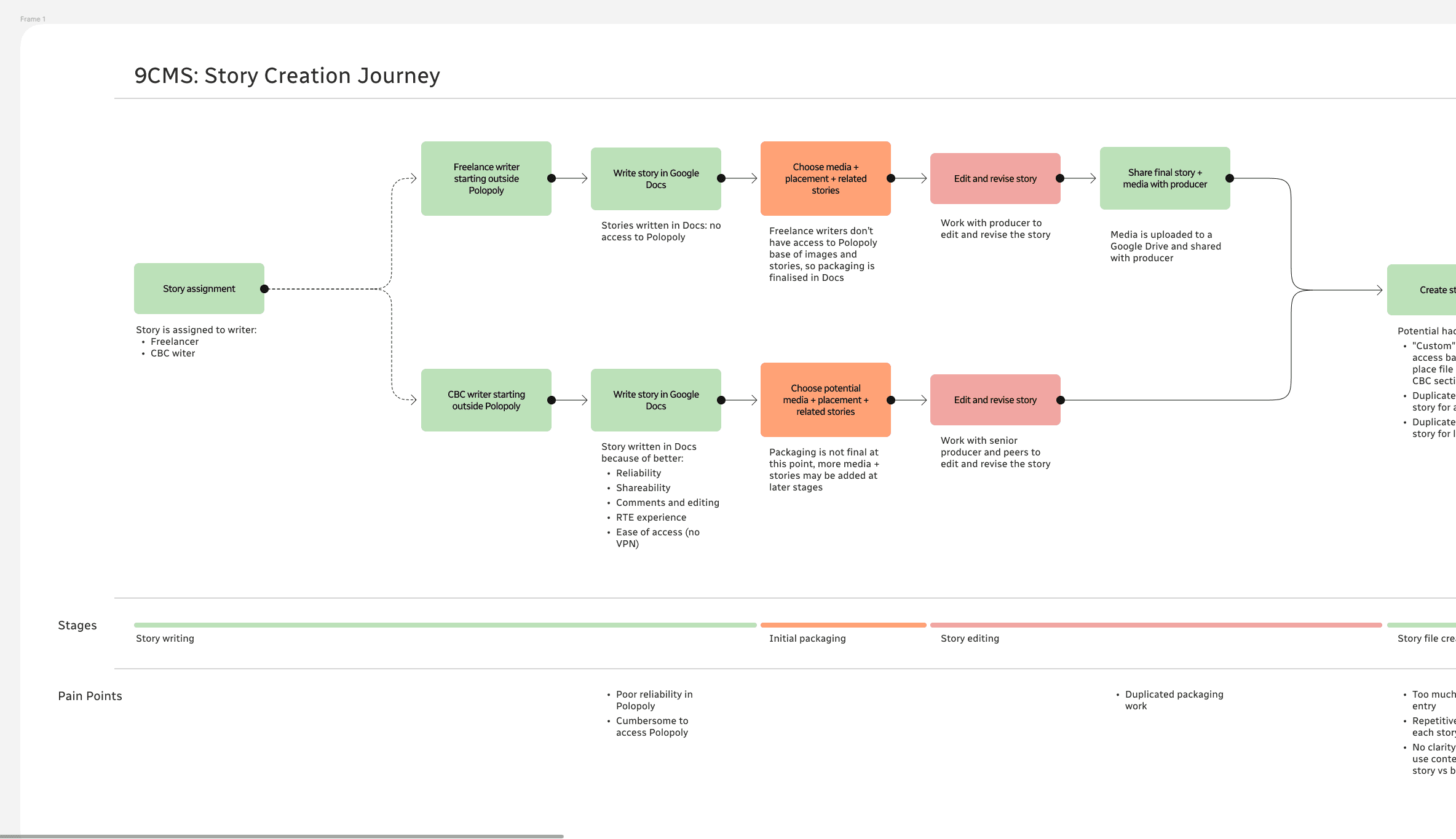
design system.
design.
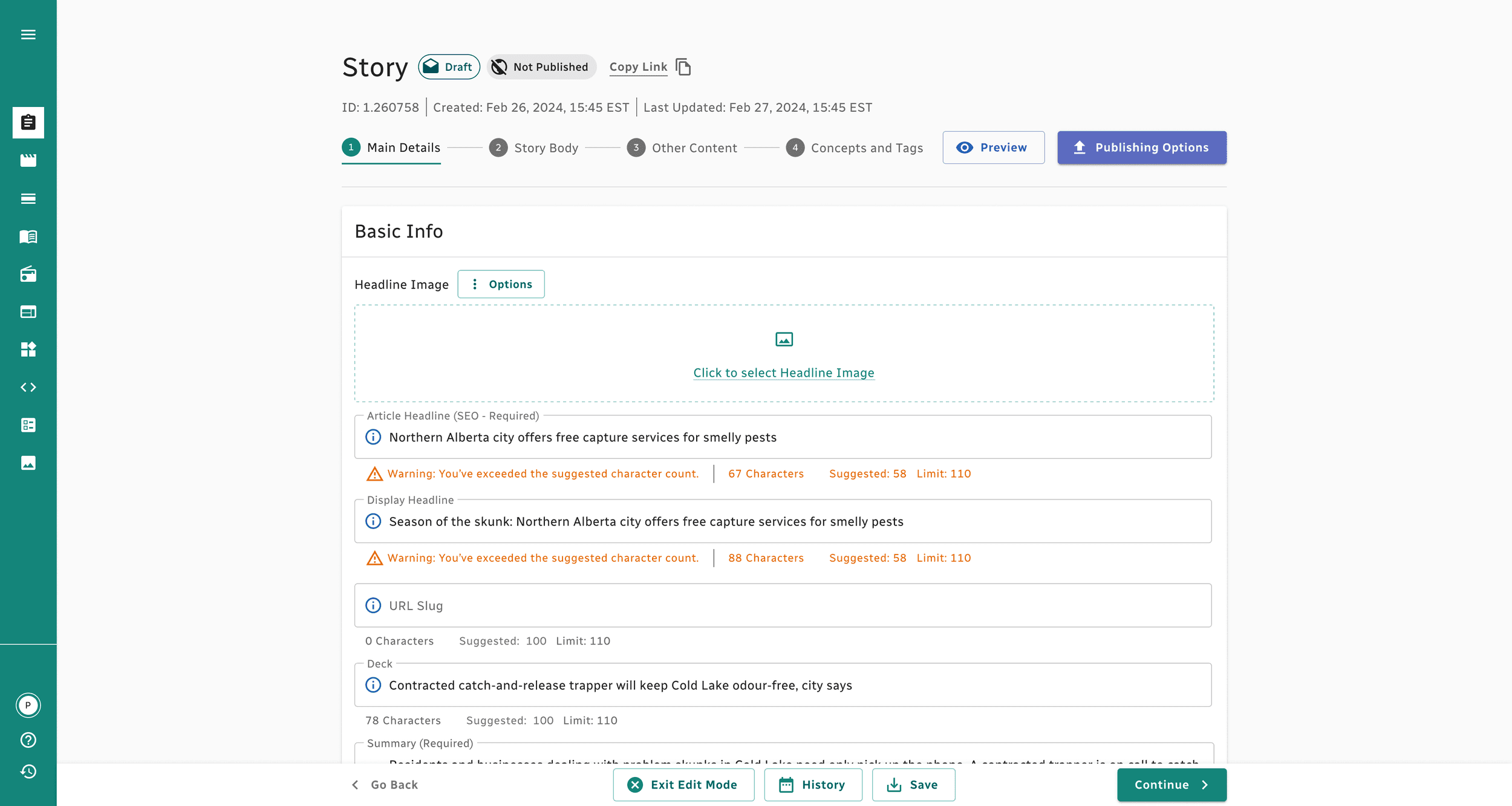
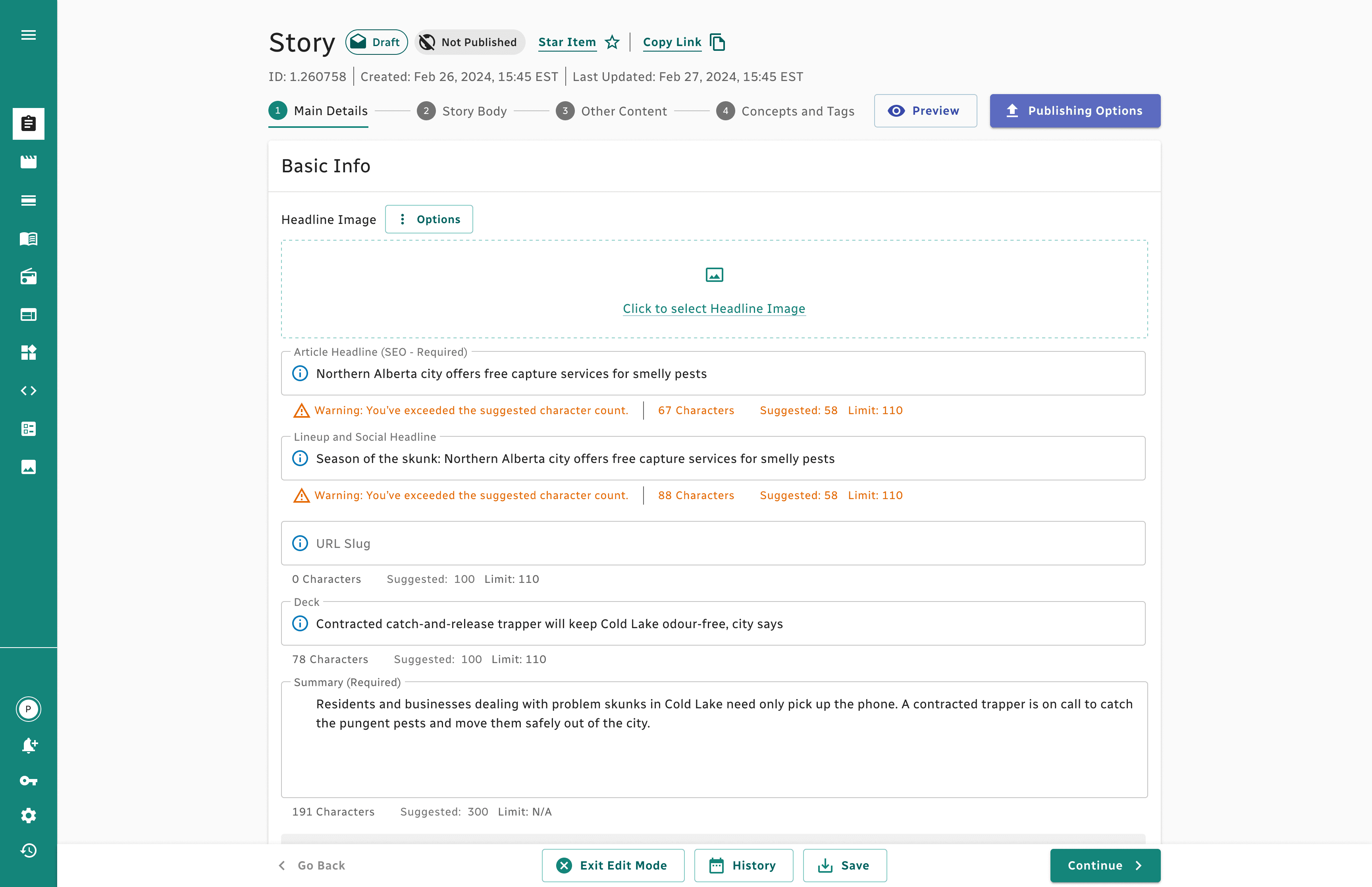
Story packaging goes far beyond writing. Producers control publication placement, advertising permissions, SEO, and more.
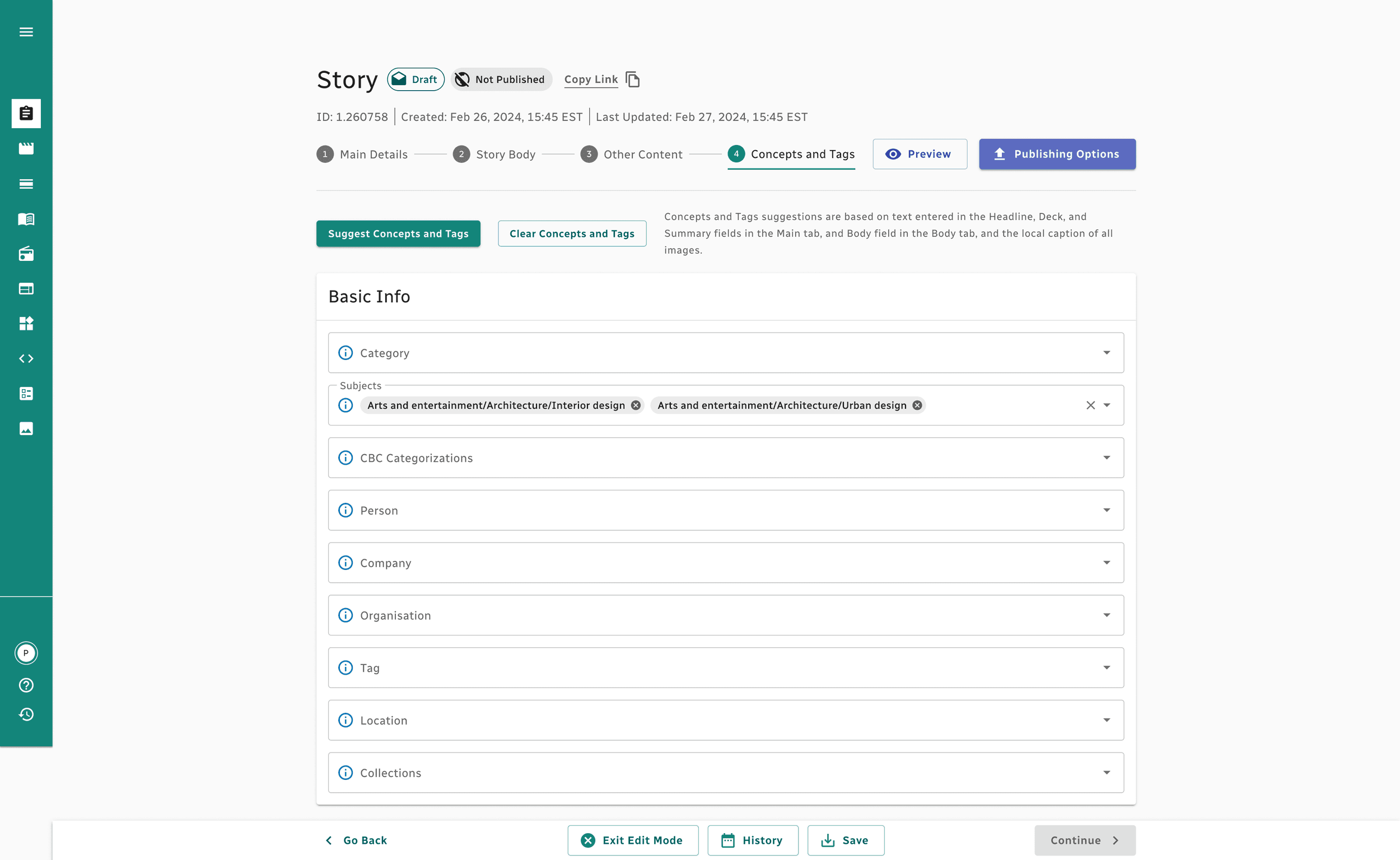
The users need a fast and efficient way to input and manage metadata about their stories.
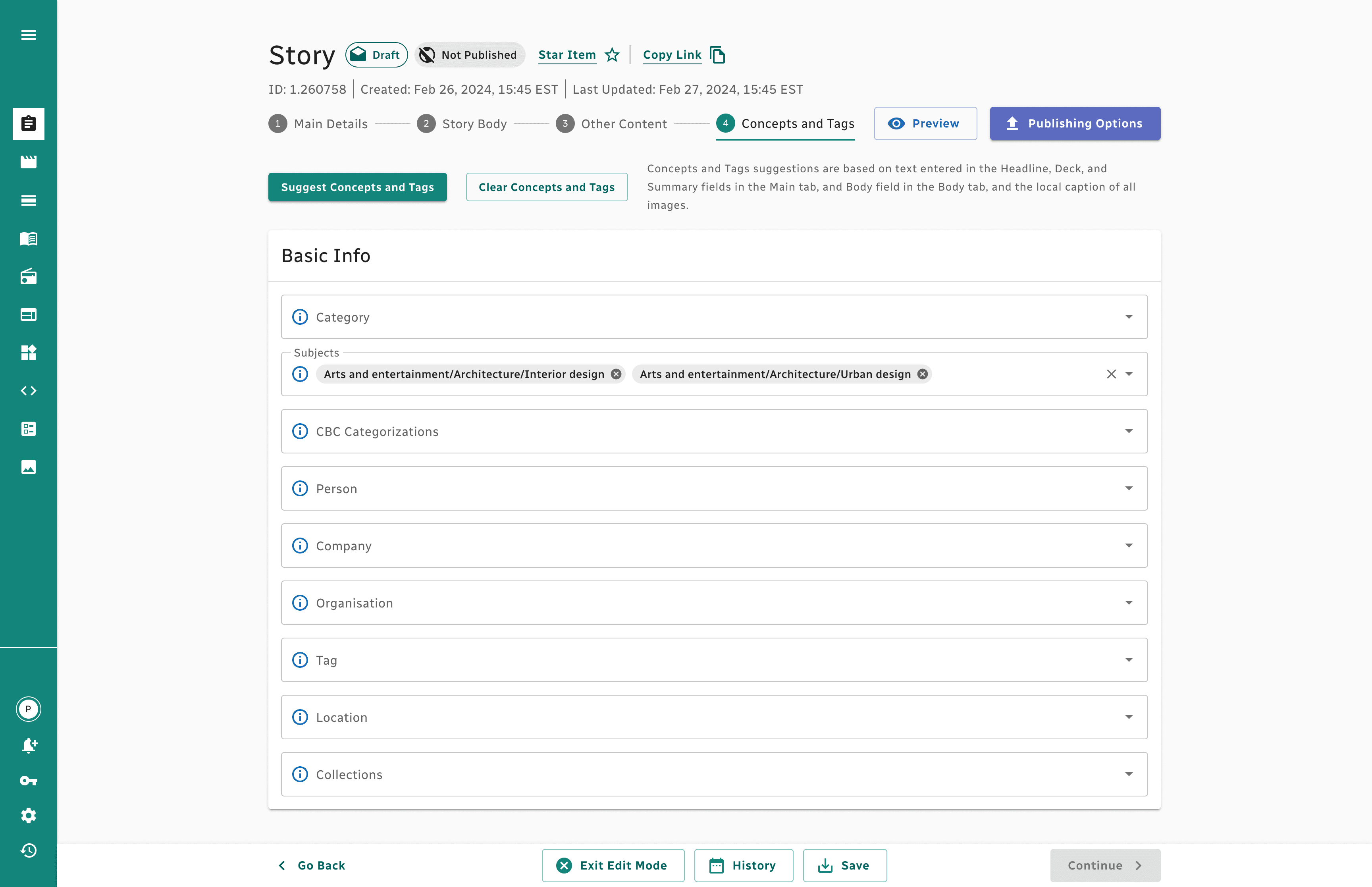
The concepts and tags tab allows users to input all important metadata and has an option to algorithmically auto fill the fields based on the content input to the story.
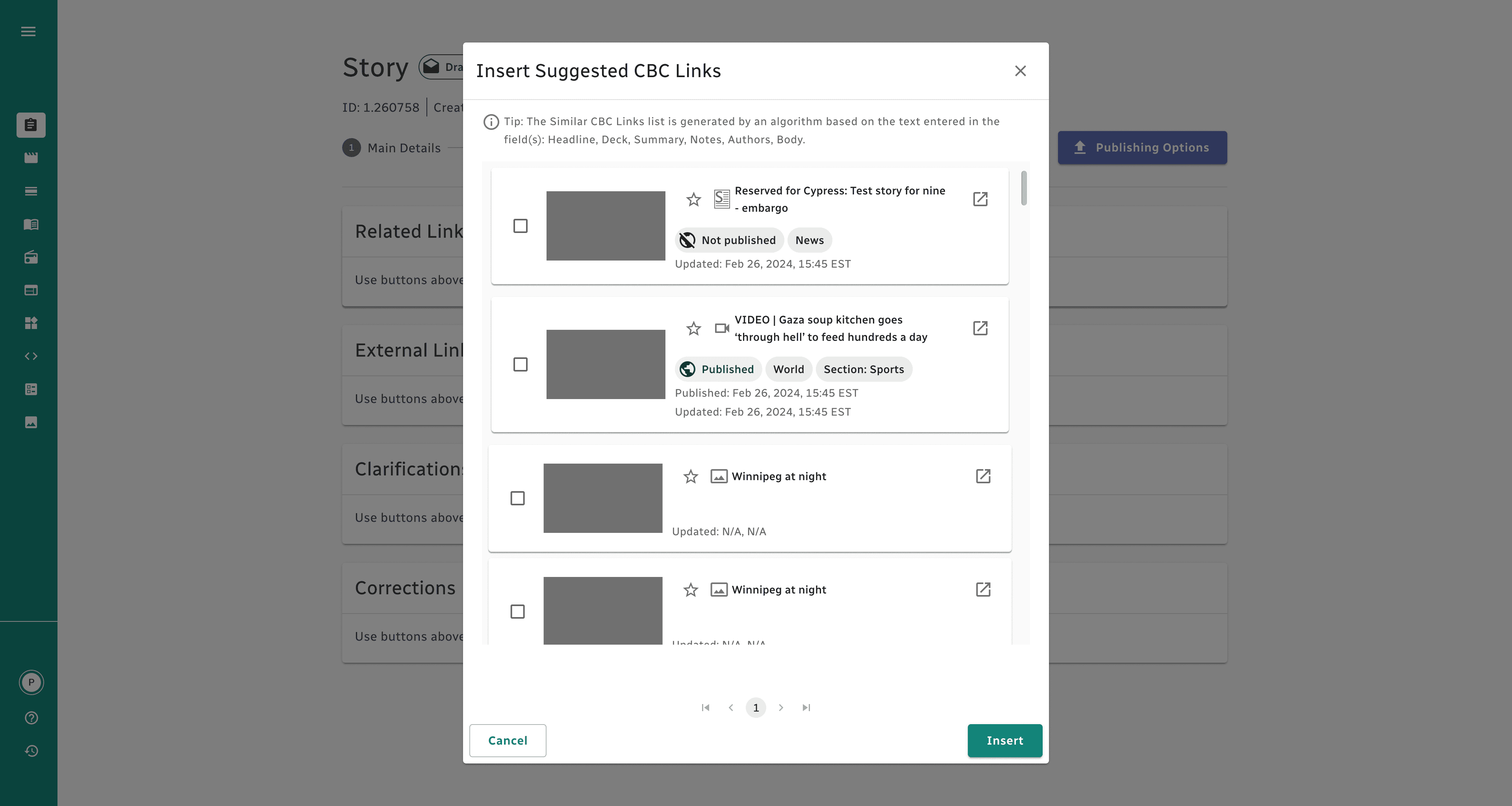

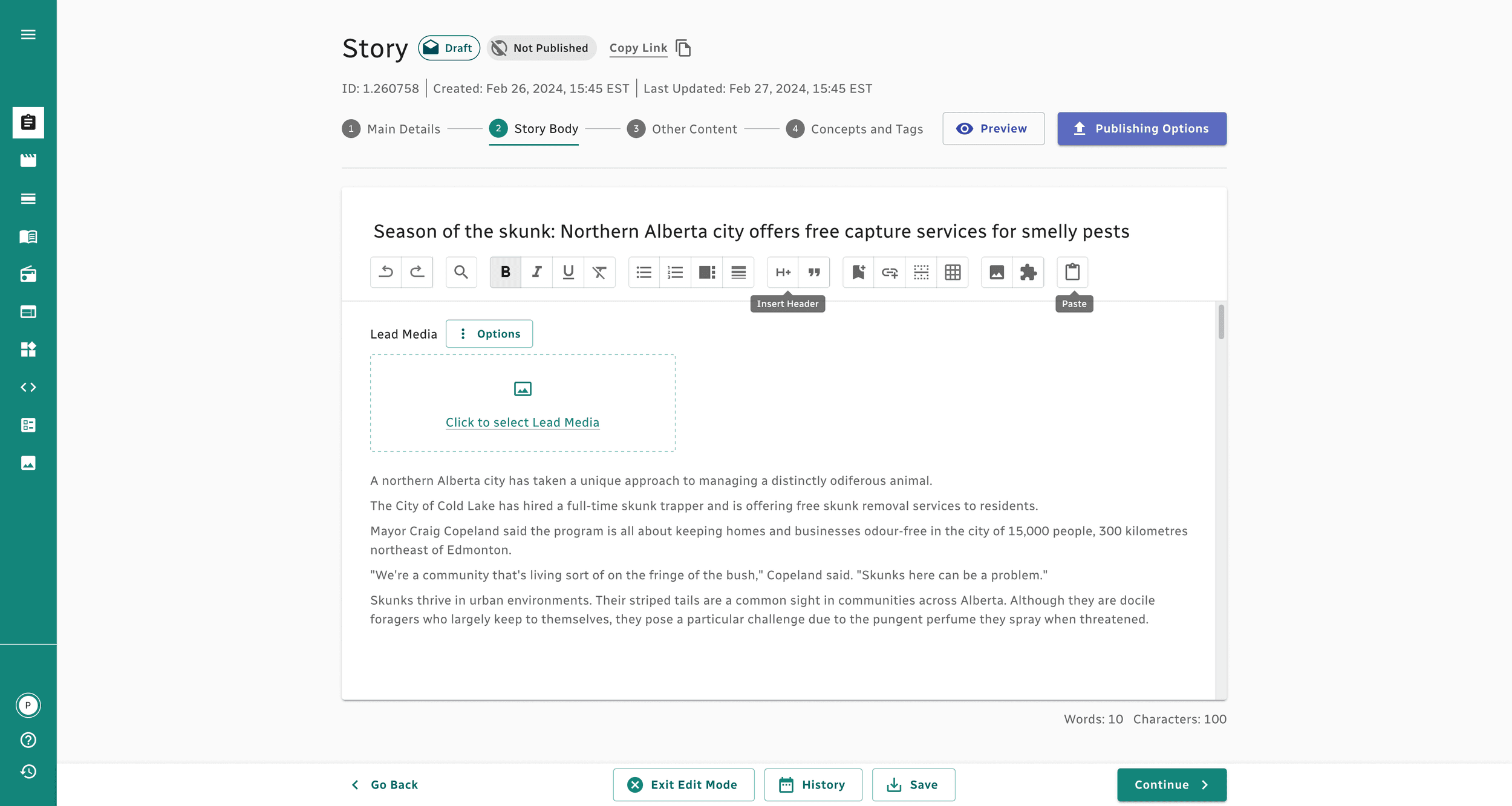
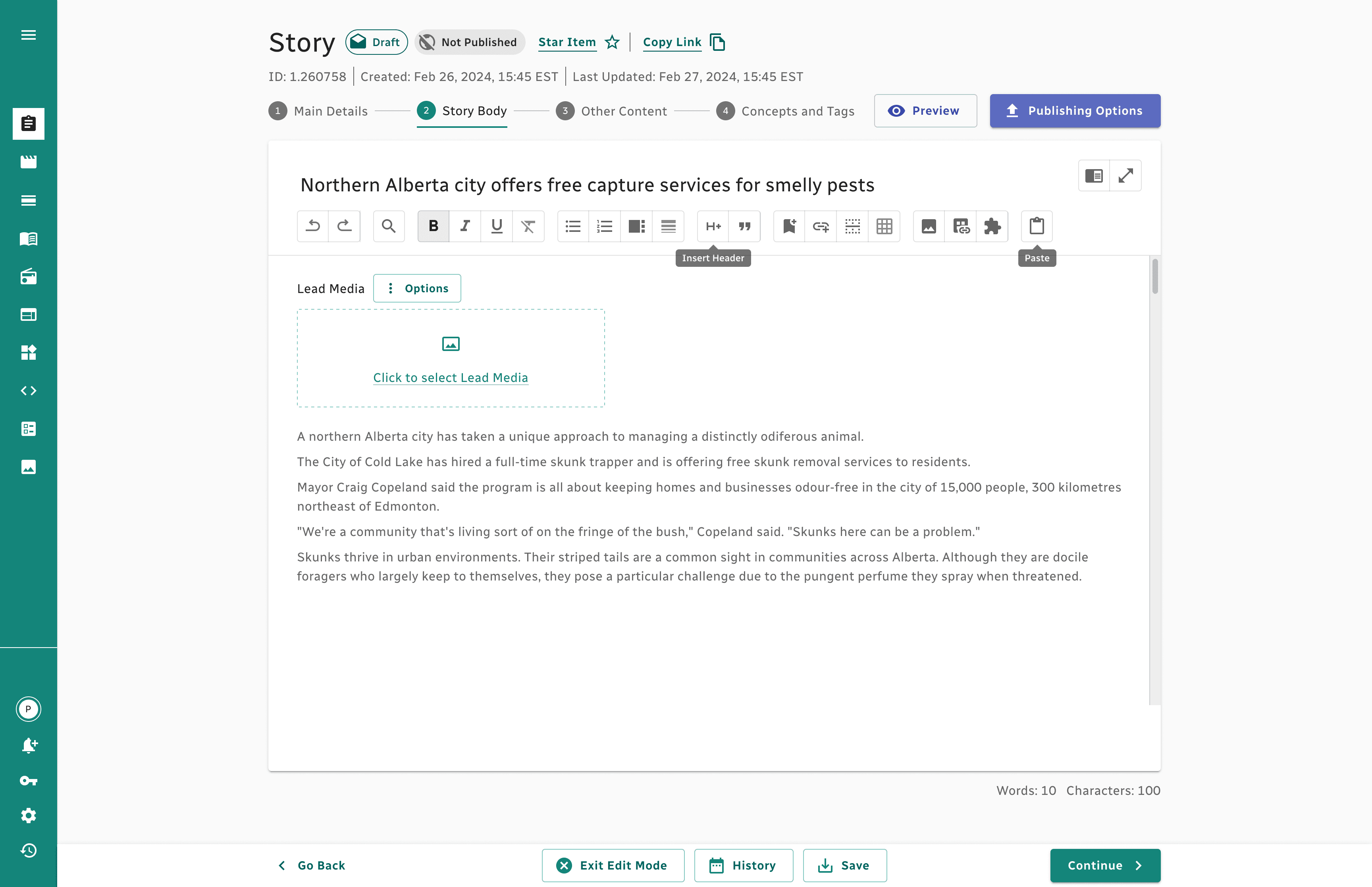
I designed a custom rich text editor that would handle basic story writing needs as well as custom features that are specific to the companies work flows and front end presentation.
A WYSIWYG-like editor helps users better imagine how their stories will be presented while working on it.
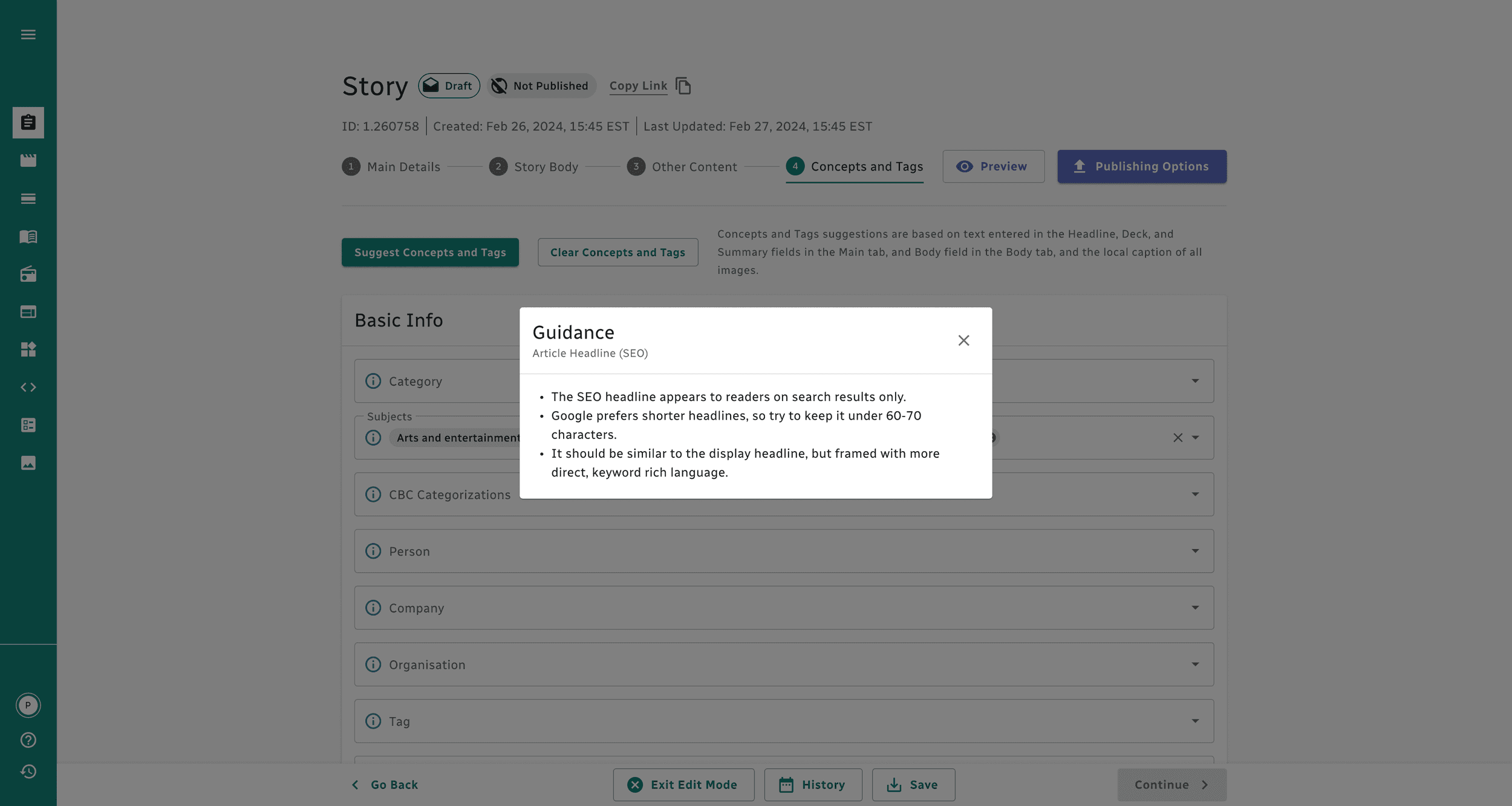
Our research revealed widespread confusion about best practices across a large, distributed workforce.
Rather than relying on external documentation, I designed the Guidance feature — contextual info buttons that surface editorial best-practice tips inline. Content was written and approved by lead producers, ensuring guidance reflected real standards, not just technical instructions.
user testing and iteration.
In collaboration with a UX researcher, we conducted multiple rounds of user tests on the designs to find gaps and improve it.
Alignment on shared best practices across teams was made through ongoing stakeholder touchpoints.
Using combined qualitative research with quantitative legacy usage data helped to identify which features mattered most and how they were actually being used.

key aspects.
Bespoke Features
Instead of a generic CMS, this product is designed specific to how editorial staff work at CBC and their needs
Flexibility
The CMS is flexible enough to be further customized to changing needs from editorial staff or changing audience facing products
Prioritizing User
Experience
Unlike our previous vendor product, we prioritized the user experience, leading to happier and more efficient workers.